Knowing when to consider using subcontractors is the difference between scalable growth and operational stability. Here are a few key signs that it's time to leverage subcontractors:
- Geographic Expansion: You’ve landed a contract in a region where you don't yet have a full-time staff. Subcontracting allows you to service the client immediately while you evaluate the long-term viability of that market.
- Specialized Skill Gaps: If a project requires complex fire code certifications or specialized networking configurations that your team doesn't handle daily, it is often more cost-effective to hire an expert than to train from scratch for a single job.
- Capacity Peaks: When multiple large-scale projects coincide, subcontractors offer the operational flexibility needed to meet deadlines without overextending your internal resources.
Why Subcontracting Helps Your Business Grow
When managed correctly, subcontracting isn’t just about "getting the job done"—it’s about enhancing your firm’s capabilities:
- Fixed Costs vs. Variable Costs: You only pay for the labor when there is work to be done. This keeps your overhead low and your margins protected during slower periods.
- Increased Agility: You can say "yes" to larger, more diverse projects that would otherwise be out of reach, allowing you to compete with larger integrators.
- Access to Expertise: Subcontracting allows you to tap into specialized skills, which results in superior quality for installations involving complex or emerging technologies.
Protecting Your Brand and Reputation
Subcontracting is not without its risks. Because the subcontractor is a direct reflection of your brand in the eyes of the client, you should be diligent:
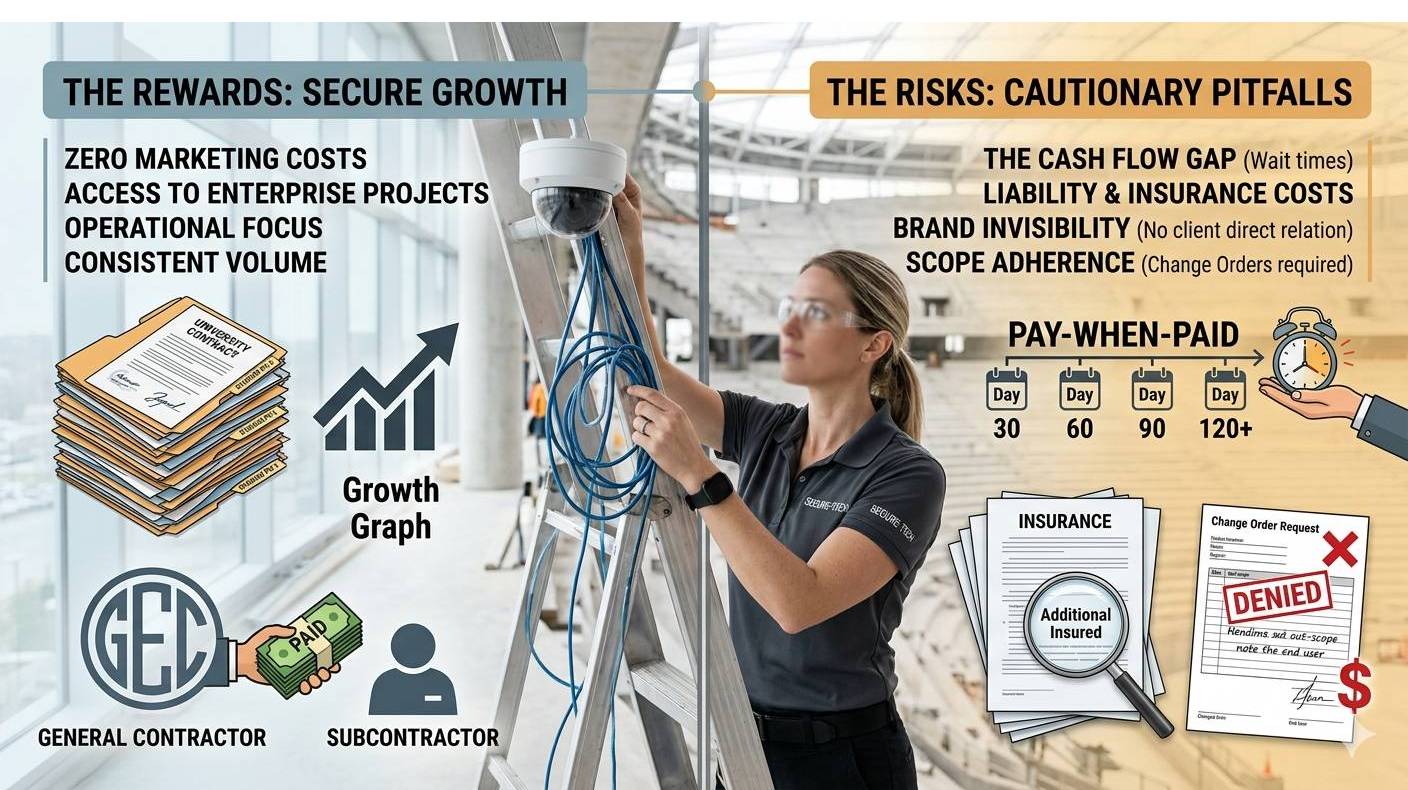
- Vetting and Compliance: Never skip due diligence. Ensure your subcontractors have the necessary licensing, background checks, and, most importantly, comprehensive insurance coverage that names your firm as Additional Insured.
- Quality Control: Establish clear Standard Operating Procedures (SOPs). The client shouldn't be able to tell the difference between your in-house technician and the subcontractor. Conduct spot checks and require detailed digital photo documentation of all completed work.
- The "Non-Compete" Factor: Ensure you have ironclad non-compete and non-solicitation agreements in place. A subcontractor is there to support your relationship with the customer, not to pitch their own services or soliciting the account..
Final Thoughts
Subcontracting is not a sign of weakness; it is a sign of a maturing business that understands how to leverage resources for maximum efficiency. By focusing your internal team on core competencies and using trusted partners for specialized or additional work, you can scale your operations with confidence and care.
Every subcontractor relationship carries risk. The firms that scale successfully are the ones who build the right controls before they need them. If you want a second set of eyes on your subcontractor agreements, compliance requirements, or operational SOPs, reach out for a confidential consultation.